
21st August 2020
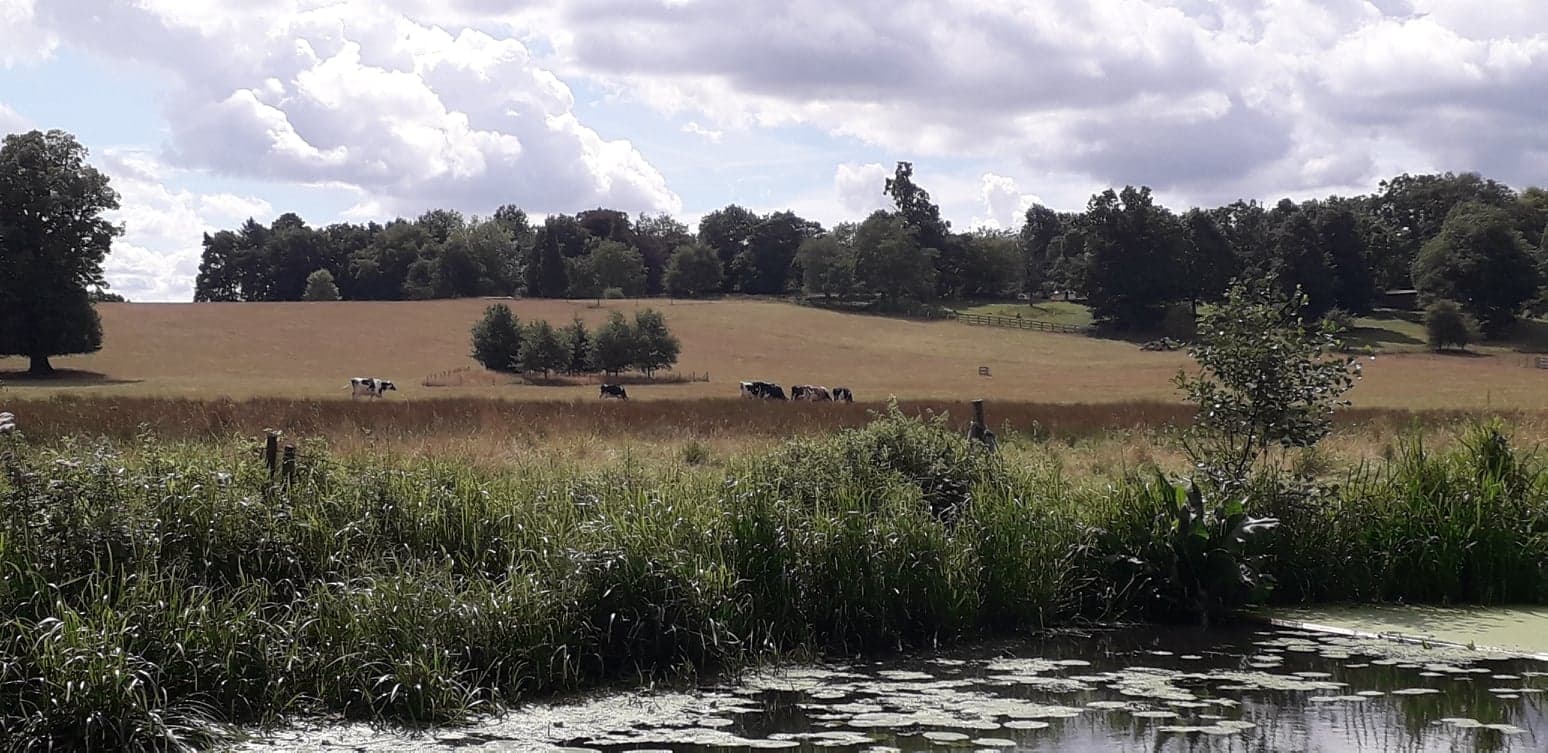
Today I visited a stretch of the River Tiffey, to see how the Environment Agency had responded to an incident with fish mortality (death) earlier in the week.
My father and brother set off to go for an afternoon of fishing a couple of days ago, however to my surprise they returned rather quickly from their nearby River Tiffey fishing spot in Kimberely, Norfolk.
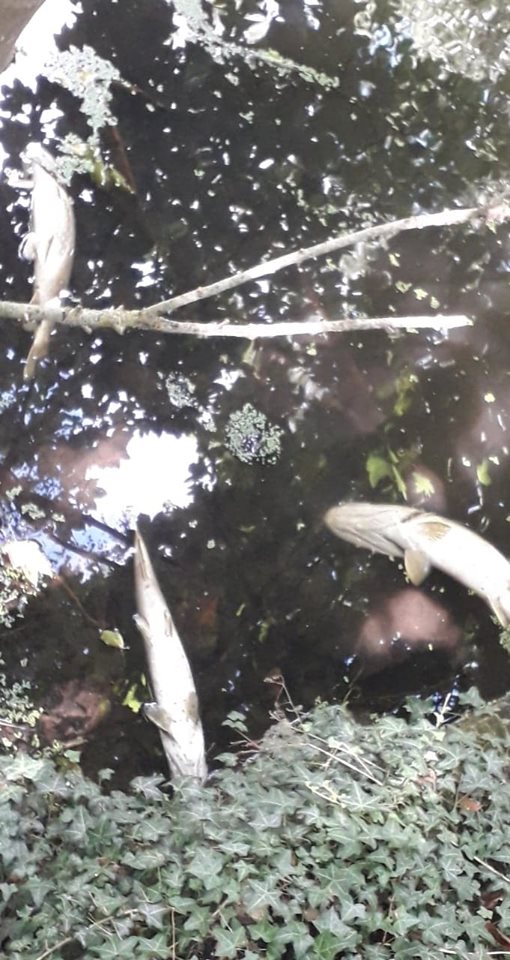
Unfortunately, upon arrival, my family found many large fish, such as pike and big perch, were floating dead on the river surface. You can see evidence of this in the picture (left), but what had caused it?
What my family noticed was that only the large fish seemed to be dead at the surface, with the small fry thriving as a result of the large predators being removed. They were unsure if they had been deliberately killed to help with spawning season, or if something else had caused this incident.
Having studied aquatic ecology during my degree I could shine some insight into the cause, with the size of fish being the key clue. With only the large fish being dead I suggested that oxygen depletion was likely the cause, as larger fish have higher oxygen demands. Something like pollution, or high ammonia levels and you would expect fish of all sizes to have died.
This theory was confirmed today when we went to take a look at the site and see if anything had been done. We bumped into the Environment Agency who were taking action to resolve oxygen depletion in the river with levels falling to a very low 10%.

A duckweed problem seemed to be the main cause of the problem according to the agency, with the surface plant stopping light penetrating the water column, disabling submerged water plants from photosynthesizing and adding oxygen back into the water. Duckweed also photosynthesizes but as it is a surface water plant the oxygen it releases goes out into the air, rather than into the water, causing the river to become oxygen-depleted and the fish to suffocate. The weed also slows the water flow down, further reducing the aeration of the water.
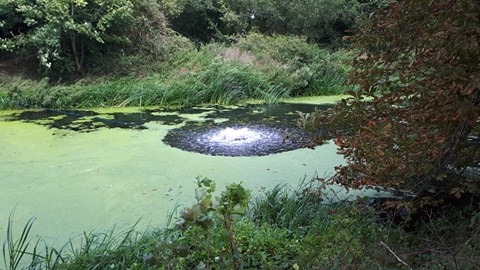
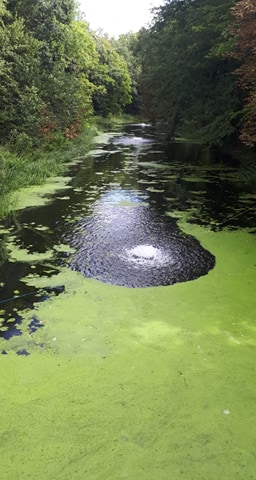
However, the Environment Agency are acting fast and have already removed as much duckweed as possible, while also trying to aerate the water with pumping systems. After talking with them briefly, they also saved many of the large fish that had reached the nearby sluice downstream on a previous day.

This fast action has saved many of the large fish in the section of river and plans are already in place to stop this event, which seems to take place every year, with agency employees suggesting to me that they are looking into plans to put booms in place upstream in the future to collect the duckweed so it can be removed.
This efficient and rapid response may have saved the river ecosystem, helping to limit disruption to the food web by saving as many predators as possible. Hopefully this will also allow budding fishermen to soon return to this scenic Norfolk spot.
If you see an incident such as this, or maybe something else environmentally worrying in the UK, you should call the Environment Agency hotline directly on 0800 80 70 60, so that they can respond as quickly as possible to limit any damage.

 Jack's Conservation Blog