
The Mauritius government have started their operation to sink the remains of the MV Wakashio, a month after it first ran aground.
The Japan MV Wakashio ran aground on Mauritius’ coral reefs over a month ago and proceeded to spill 4,000 tonnes of its fuel into the surrounding ocean two weeks later. Since then operations have focused on containing the spill with booms, while the government also claimed to have removed 3,000 tonnes of the fuel last week.
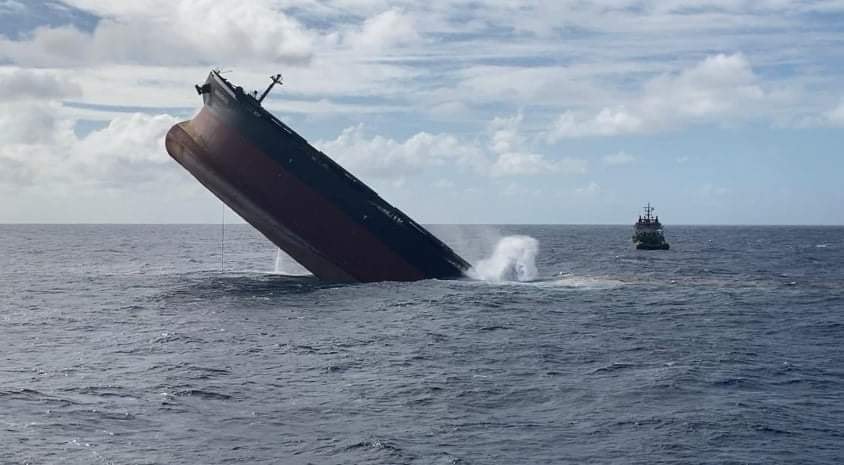
Now the government are looking to put an end to the international attention surrounding this environmental catastrophe by sinking the Wakashio.
However, environmentalists continue to be critical of the government’s actions. Campaigners were already upset with the slow initial response to the ship running aground, leading to the oil spill, as well as the limited response to the spill with much of the important work done by local volunteers and NGOs (Non-government organisations, such as not for profit environmental organisations).
In fact this could be one of the worst options for the local marine environment, according to Happy Khambule, Greenpeace Africa’s senior climate and energy campaign manager, who spoke to The Guardian.

“Sinking this vessel would risk biodiversity and contaminate the ocean with large quantities of heavy metal toxins, threatening other areas as well, notably the French island of La Réunion. Mauritians had nothing to gain from the MV Wakashio crossing their waters and are now asked to pay the price of this disaster. More pollution further risks their tourist-based economy and fish-based food security,” Khambule said.
The Mauritian government would argue that the sinking of the vessel could itself become an important habitat for marine species. Sinking ships and other large structures is a well known technique for creating artificial reefs and it is true that there are many examples around the world where this has worked effectively to create new habitats. However, this will most likely take over 30 years, at least, and the pollution from the ships metal alloys and the lasting impact of the fuel spill may ultimately outweigh any benefits of a future artificial reef, given the fantastic natural environment that was destroyed as a result.

Already the impact of the oil spill has had greatly detrimental impacts on the local area, with the spill reaching Ile aux Aigrettes nature reserve and the Blue Bay Marine Park, both of which home a huge amount of biodiversity. I have personally visited the Blue Bay Marine Park and seen the huge variety of fish and coral species it provides habitat for as well as the endangered Hawksbill and Green sea turtles. It has also spread across the mangrove estuary system which is important for juvenile fish. As well as the sea grass beds that Green sea turtles in particular, rely on for a food source.
Recently it has also been revealed that two of the ship’s officers have been arrested on charges of endangering safe navigation, as the ship diverted over 100km from its shipping lane to strike the coast of Mauritius where it did. While the captain is believed to have been celebrating his birthday, with crew members failing to respond to coastguard attempts to steer them away from the coast.
 Jack's Conservation Blog