You have heard of the Great Barrier Reef, the largest reef system in the world and natural wonder… but have you heard of Norfolk’s amazing equivalent?
Despite the North Sea’s usually uninviting appearance, beneath the depths, the Norfolk coastline actually houses the longest chalk reef in Europe, possibly the world; the Cromer Shoal Chalk Beds.
A shoal, in geological terms, is a natural submerged ridge, bank, or bar. This usually consists of, or is covered by, sand or other material and rises from the bed of a body of water all the way up till it reaches close to the ocean’s surface.
In this case, ice age melt-waters eroded the chalk to leave these shoal features. The chalk is most notably exposed at the shore as rock pools at West Runton and the reef itself lies mainly just 25ft under the sea’s surface.
If you are lucky enough to dive into the site you may also see chalk stacks and arches and deep chasms all of which were caused by glacial ice melts.
By providing a hard substrate the chalk bed acts as a site for epifauna (aquatic animals, such as starfish, flounder, or barnacles, that live on surfaces) to attach themselves to rocks, in turn providing food for fish and crustaceans, and thus the reef ecosystem is created.

Unique and Special Species
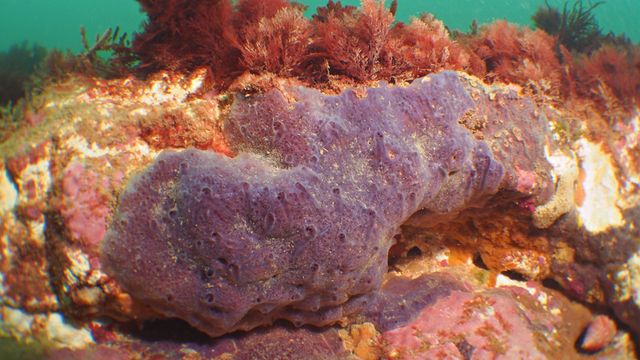
The reef is even home to endemic (found nowhere else) species. The most recent discovery of this kind was the purple sponge – Parpal Dumplin’. – a Hymedesmia sponge. This was discovered on the reef in 2011, and was previously undocumented anywhere else in the world, making it a brand new species!
The pink sea fan coral is also found here and has a vulnerable status on the global IUCN red list, making the protection of this site all the more important.
In addition, the Cromer Shoal Chalk Beds support a further array of incredible unique marine biodiversity.
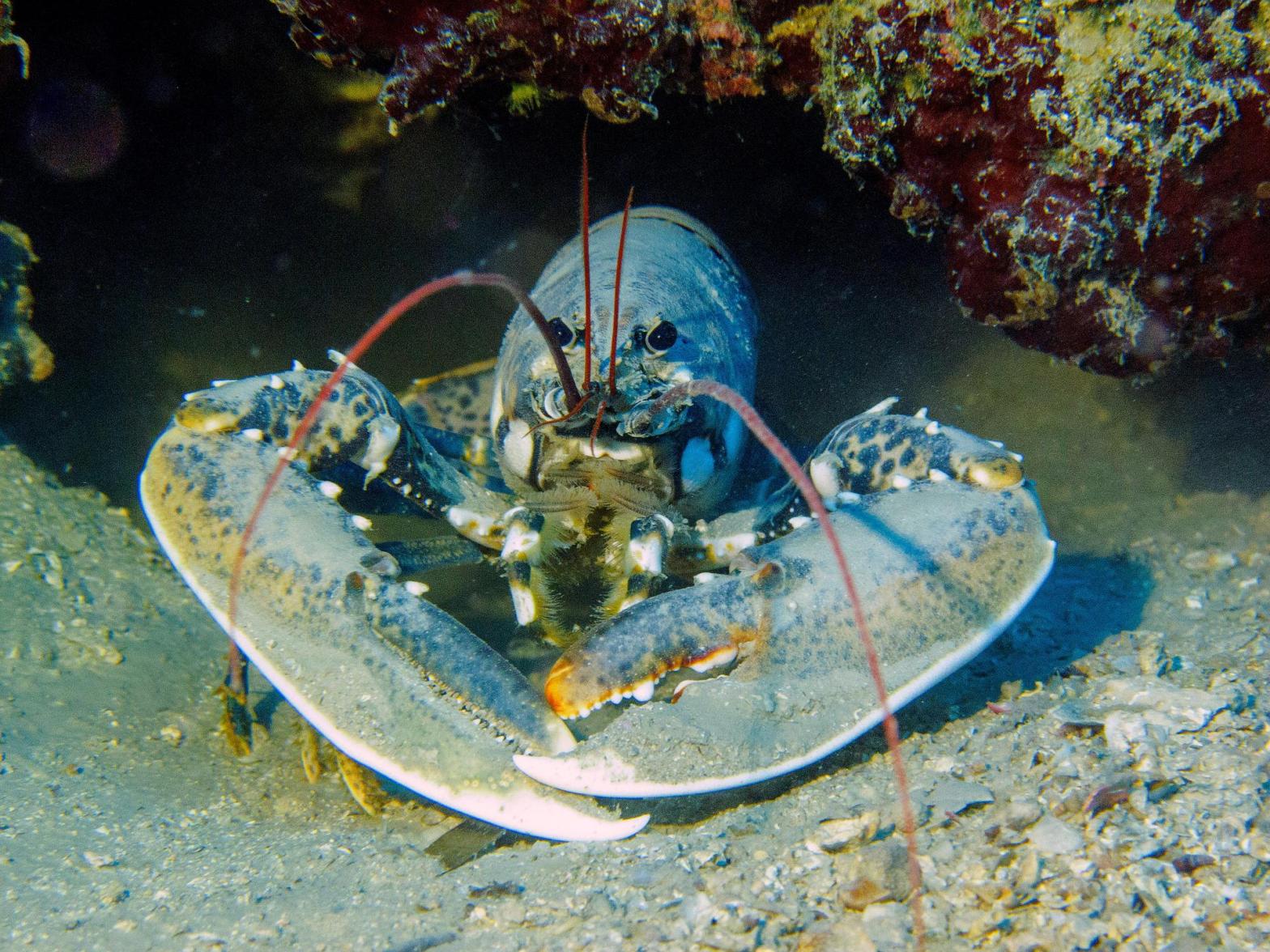
Crabs, lobster, starfish, sea cucumbers, nudibranchs, cuttlefish and jellyfish all inhabitant this amazing ecosystem. There are also many fish species such as sea bass, sea scorpions, pogge, pipefish, bib and horse mackerel, to name a few.
Watch the video below to learn more about this incredible ecosystem.
The Importance of the Reef
Data collection suggests that this reef provides habitat for around 350 species of marine plants and animals, with more suspected to be discovered as we learn and explore the area more. The beds are nursery areas for juvenile species, making them vitally important to sustain future fish populations, as well as being important in the food chain for animals such as the small-spotted catshark.
57% of coastal chalk in Europe is found in UK waters, which amounts to just 0.6% of our coastal habitat, making this an internationally important site for protection.
“Chalk beds are important because their cracks and crevices provide refuge for wildlife, especially juvenile invertebrates and fish. It is also a source of substrates for burrowing organisms. Any irreparable structural damage is therefore significant and may require some sort of management.” – Fiona Tibbitt – Marine Lead Adviser, Natural England
As a result, the importance of the reef was recognised in 2016 when it was designated as a Marine Conservation Zone under The Marine and Coastal Access Act (MACAA) of 2009. That made it Norfolk’s first ever MCZ!
This recognised protection is intended to ensure the incredible habitats and creatures beneath the surface are kept safe from the potential harm from human activity. But this legislation is unique in that it considers ecological and geological importance as well as socio-economic impacts, to try and ensure harmony between stakeholders in the marine sector, e.g. protecting the reef while keeping the fishing industry thriving.
How is it Being Protected and Managed?

Credit: Samantha Bean – Marine Conservation Society
The Marine Conservation Zone stretches across Norfolk’s coast for around 321 km2, starting 200 m away from the coastline and extending about 10 km out into the North Sea. It stretches from west of Weybourne to Happisburgh.
The sheer scale of this natural habitat makes it larger than Norfolk’s better-known Broads National Park!
Specifically, this legislation and MCZ status require the following features to be maintained in favourable condition: moderate/high energy infralittoral (includes habitats of bedrock, boulders and cobbles which occur in the shallow subtidal zone and typically support seaweed communities) rock, moderate/high energy circalittoral rock (characterised by animal dominated communities), subtidal (lying below the low-tide mark but still shallow and close to shore) chalk, subtidal coarse sediment, subtidal mixed sediments, subtidal sand, peat and clay exposures, and the North Norfolk Coast (subtidal) as a geological feature.
The above requires some activities to be regulated in order to maintain the favourable status of the reef. As such, Natural England (NE) and the Eastern Inshore Fisheries and Conservation Authority (Eastern IFCA) have been investigating the health of the chalk beds and the effect of different fishing methods on the reef’s health.
To do so they have been using special underwater drones to attempt to assess the health of the reef. One particular finding of this research has been the negative impact of potting (using pots to fish for crustaceans – crabs/lobsters).
The storing of pots on the reef over winter was found to cause significant damage via the shank (the rope that holds pots together) getting caught on the chalk and cutting and slicing into it.

Currently, Natural England and the IFCA are working with fishermen to resolve this issue while continuing to monitor the reef with its drones to provide a robust evidence base for future decisions around marine protection in this area. Discussions are being held around pots, their storage and design, in order to try and reduce their impact on the reef while painting the local fishing industry.
Chalk is soft compared to other rocks and thus more susceptible to damage. It also takes millennia to reform and as such the greater protection that can be put in place on this site will be widely welcomed by the conservation community, to help retain this unique habitat.
Natural England continues to work with the local community and fishing industry to try and work together to overcome these issues and ensure a sustainable local fishery alongside the protection of the Cromer Shoal. Engaging the public not only gives them a voice but also helps them gain a sense of ownership and value for their local area and desire to see their local reef flourish!

 Jack's Conservation Blog