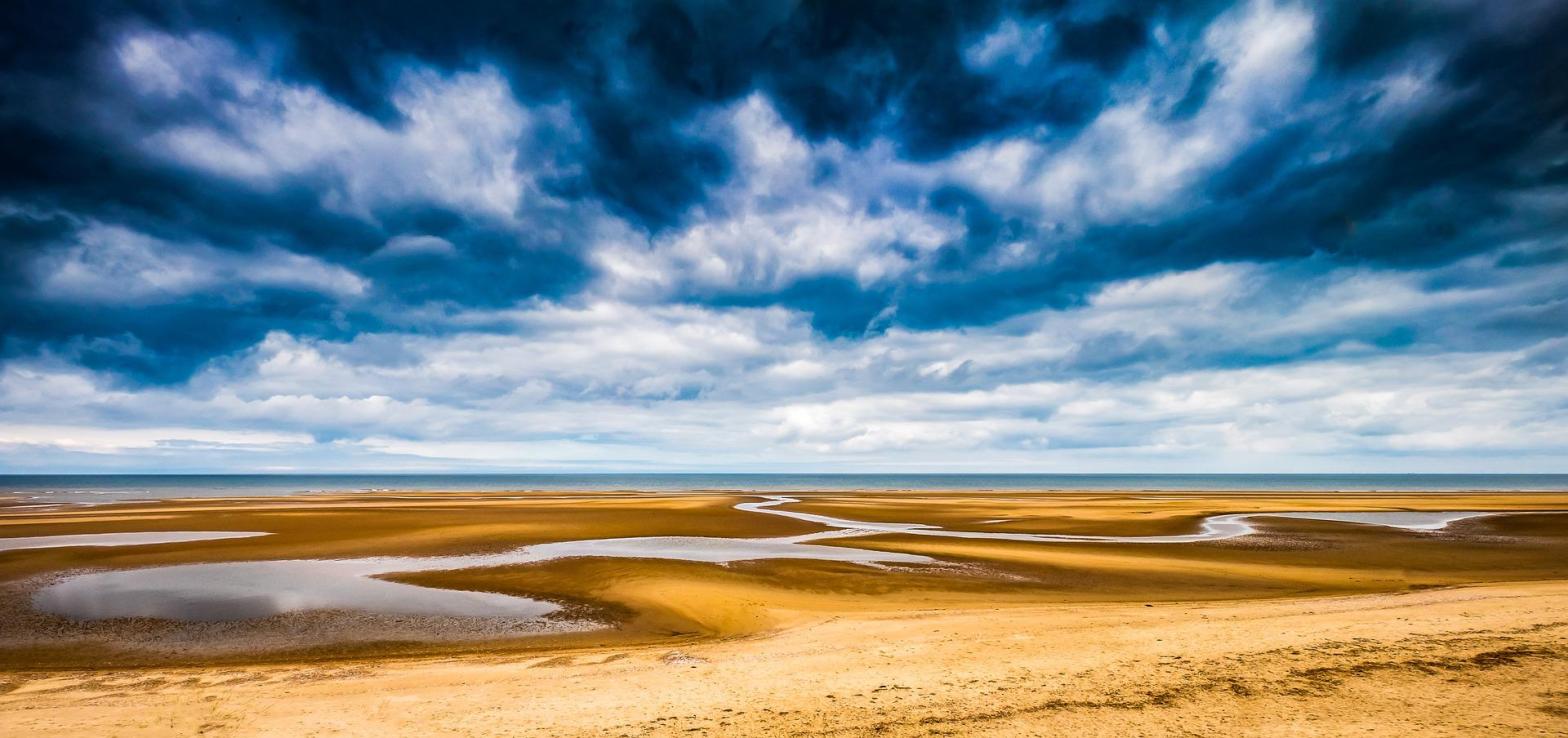
Today’s blog discovers The Wash, another of Norfolk’s natural coastal wonders.
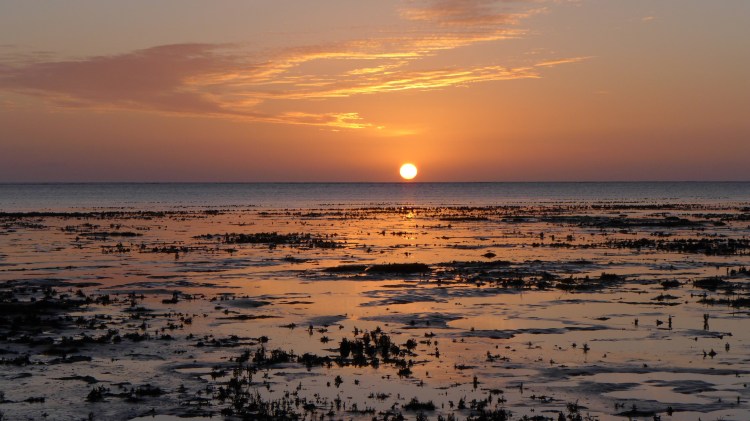
The Wash is the largest bay in England lining west Norfolk and opening up into the North Sea. It stretches approximately 20kms wide and 30kms long, making it the most extensive estuary system in the UK.
This stretch of coast, which extends from the cliffs of Hunstanton in North Norfolk up to Lincolnshire’s Gibraltar Point, has attracted people to it for centuries due to its fertile soils, bountiful seas and beautiful beaches.
The Importance of this Site and its Protection

More importantly, it plays host to a huge array of marine and coastal fauna and flora (animals and plants), making it one of the most valuable wildlife assets in the United Kingdom.
The Wash consists of a number of key habitats necessary to support this biodiversity. Salt marshes, saline lagoons, shingle banks, sand dunes, mudflats (the second largest area of intertidal mudflats in Britain), and the bordering agricultural pasture all play their part in this magnificent ecosystem.
Fortunately, this site is recognised for its importance and is designated as a Marine Protected Area as The Greater Wash Special Protection Area under the European Commission Birds Directive and UK Habitats Regulations.
Within this delegation there are also separate protected sites: The Wash SSSI (Site of Special Scientific Interest), The Wash and North Norfolk Coast SAC (Special Area of Conservation), The Wash NNR (National Nature Reserve) and The Wash Ramsar, all of which have been put in place to give specific protection to specific habitats and species across this area.
Total delegations in this area cover 62211.66 hectares.
The Sand
The sand is what we all know and love about our coastal habitats and its aesthetic attributes are just the tip of the iceberg when it comes to the importance of sand for our coastline.
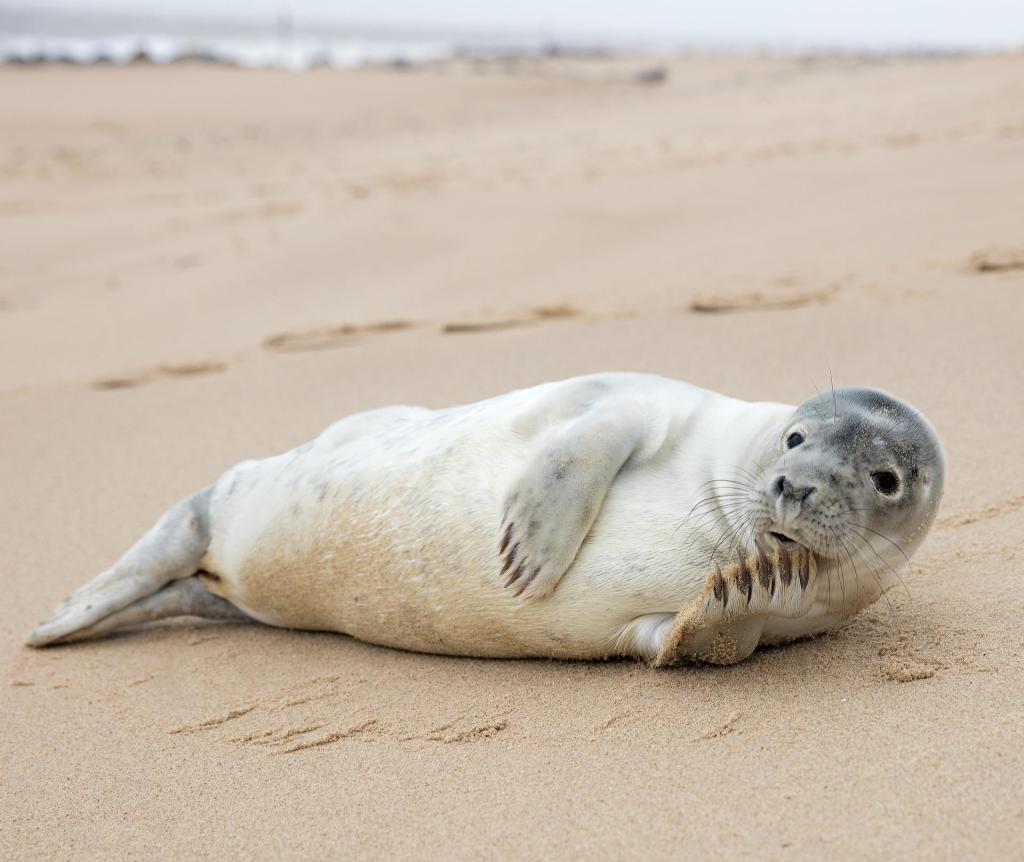
The beaches of The Wash are home to more common seals than anywhere else in the UK. Baby seals can be seen in countless numbers across The Wash and the rest of North Norfolk over the summer months. The site provides a home to some 7% of the total UK population.
The Wash is home to such large expanses of sandbank due to sandy sediments occupying most of the subtidal area (continuously covered by water). These sandbanks are diverse in composition and include coarse sand through to mixed sediment at the mouth of the embayment, providing habitat for a number of different species as seen below.
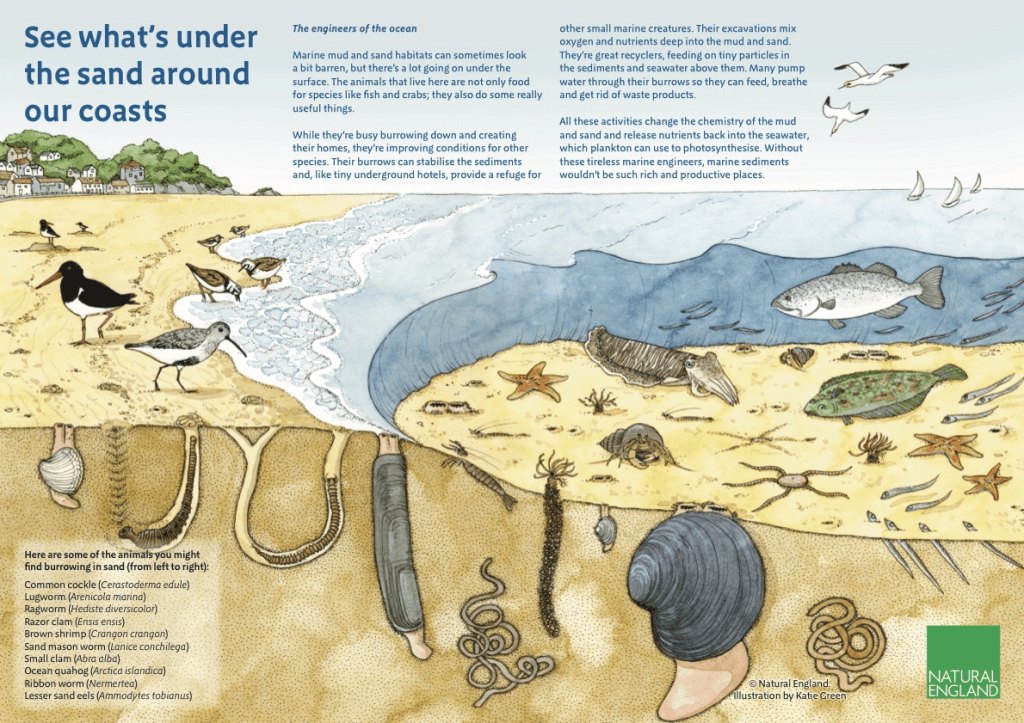
As you can see there are a number of communities present in the sand. Below the sand species include the ocean quahog and the razor clams reside.
Benthic communities (reside on the bottom) that inhabit sandflats in the deeper part of The Wash are particularly diverse, as you can see from the image above you may find sandeels, hermit crabs, starfish and shrimp among others on the sandy seafloor.
The sheltered sandbanks are also incredibly important nursery grounds for young commercial fish species, including cod, plaice, and sole, enabling them to grow with a lesser threat of predation.
The Mud
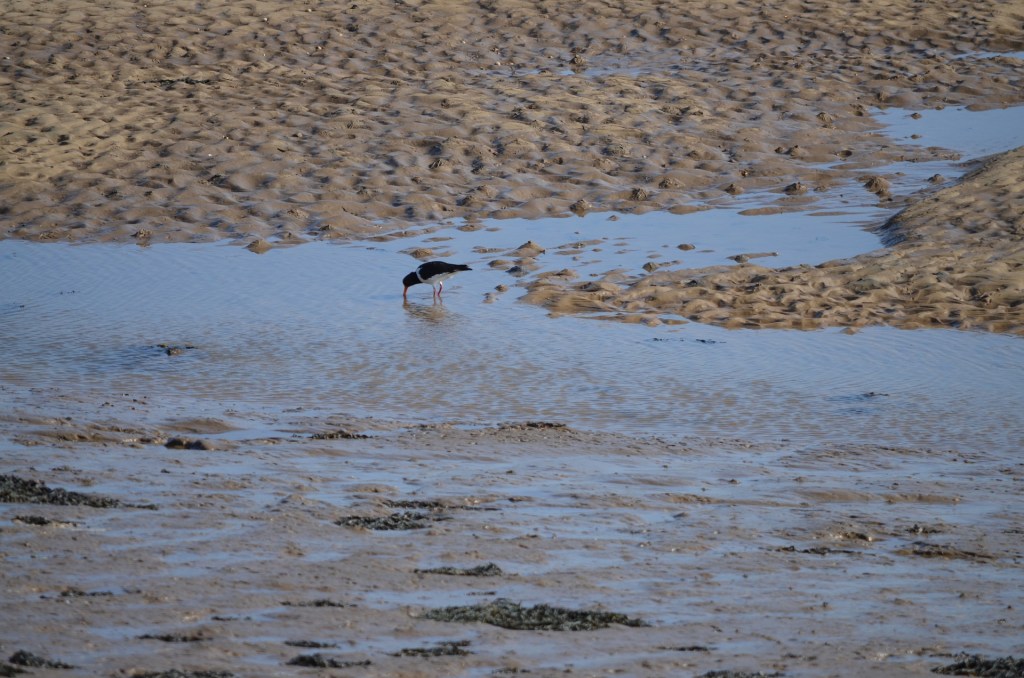
Now mud is not usually considered exciting or important by many, but it is actually one of the most valuable assets this landscape has to offer.
The Wash, is the second-largest area of intertidal (between high and low tide marks) flats in the UK. Sandy intertidal flats tend to dominate the area, however, there are many soft mudflats in the areas, created as a byproduct of the sheltering of barrier beaches and islands along the north Norfolk coast.
Intertidal mudflats play host to a great array of peculiar sounding, polychaete worms and bivalve molluscs. Polychaete worms are more commonly known as bristle worms whereas examples of the molluscs found here include cockle and mussel beds, which alongside algae provide rich foraging grounds for many bird species.

As you can see above it is not just worms and molluscs in the mud but also crustaceans, while they are also incredibly important in supplying food for fish.
The salinity (saltiness) of these tidal flats has a wide range due to the fact it stretches from the open ocean (supporting rich invertebrate communities) to estuarine brackish water close to the rivers, supporting the progression to marshland habitat.
The Marshes
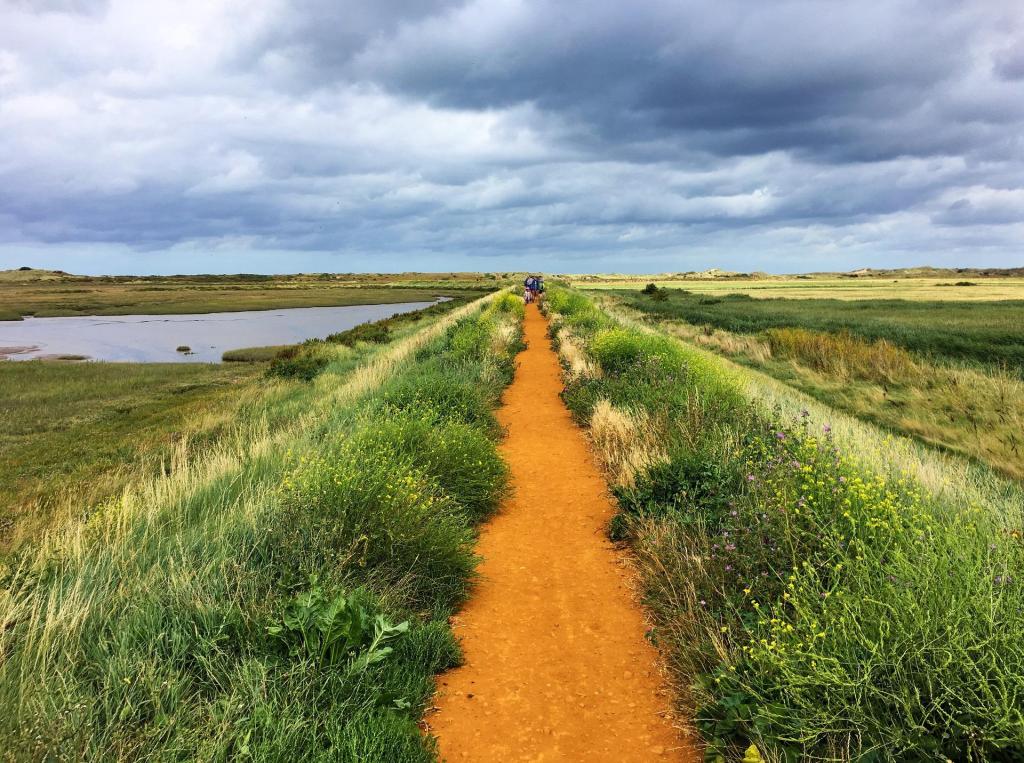
The eastern coast of England is one of the few areas in the UK where salt marshes are generally found. However, as is a reoccurring theme with The Wash, the marshes along this stretch of coast create the largest single area of this type of vegetation in the UK.
The vegetation here is heavily populated by annuals (those that complete their life cycle within a single growing season) that are able to colonise mud and sand, because of the enclosed nature of the marsh in this site. Saltmarsh swards dominated by sea-lavenders are particularly well-represented on this site
This site has both the extensive ungrazed salt marshes and the contrasting, traditionally grazed salt marshes. The Atlantic salt meadows form part of a sequence of vegetation types that are unparalleled among coastal sites in the UK for their diversity and are amongst the most important in Europe.
In addition to the transition from sand and mud intertidal flats to salt marsh, the marsh also transitions to freshwater reed swamp, sand dunes, and shingle beaches, further showing the diversity of habitats at this site.
The Air
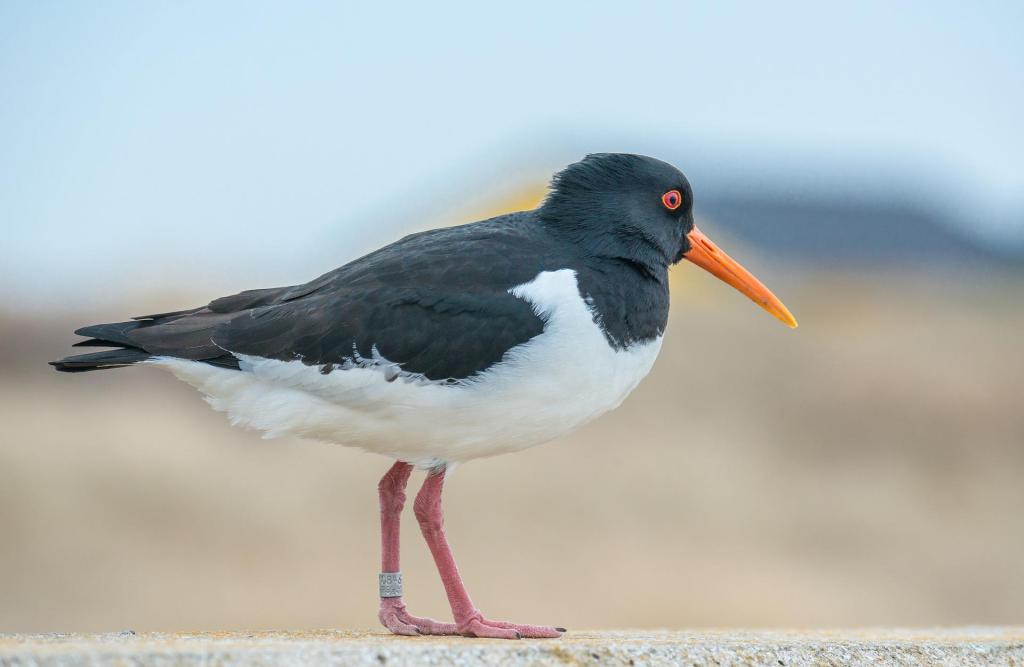
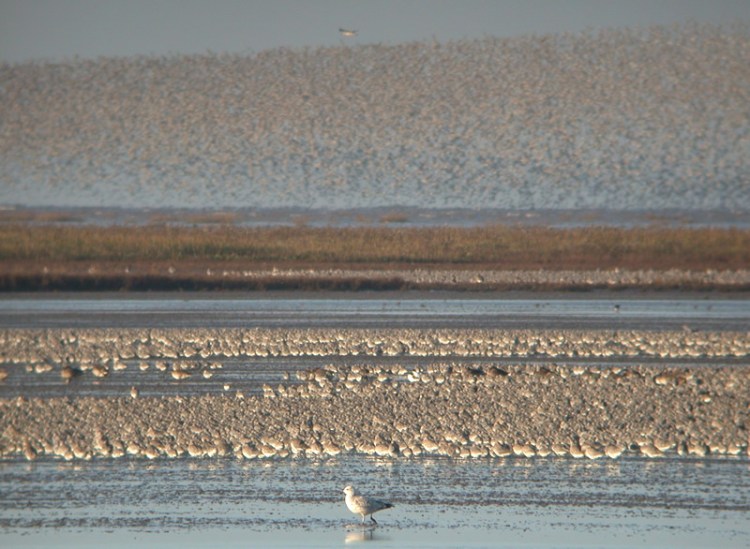
As I have mentioned or alluded to already all these habitats attract huge numbers of birds to The Wash. For example, the site is a winter feeding ground for over 300,000 visiting water birds (waders and wildfowl) – more than any other place in the UK.
Tern species, such as the little tern, sanderling and grey plover use the sandy, shingle and gravel beaches to roost.
The previously mention mudflats provide food for species such as the dark-bellied brent geese, oystercatcher, common scoter, sanderling, gadwall, curlew, pintail, shelduck, dunlin, knot, and bar-tailed- and black-tailed godwit, to name just a few!
In addition, the salt marsh provides important roosting habitat for many bird species due to the bare ground and short vegetation features. The redshank, curlew, pintail and dunlin are examples of species that roost here – while these are also the same birds that use the mud for feeding, showing the importance and interconnectedness of this site.
It also provides excellent food resources for pink-footed geese, dark-bellied brent geese, wigeon, pintail and dunlin. While dunlin and oystercatcher also roost on the adjacent arable fields.
Overall I hope you can see the diversity and importance of this amazing site on our Norfolk coast and if you get the chance to visit you are sure to see a huge array of wildlife – why not see how many you can tick off from those listed above!?

 Jack's Conservation Blog
3 thoughts on “The Wonders of The Wash”