As I have discussed previously The Wash is the largest embayment in the UK, housing a huge array of coastal and marine life. But, it holds a hidden gem not many know about.
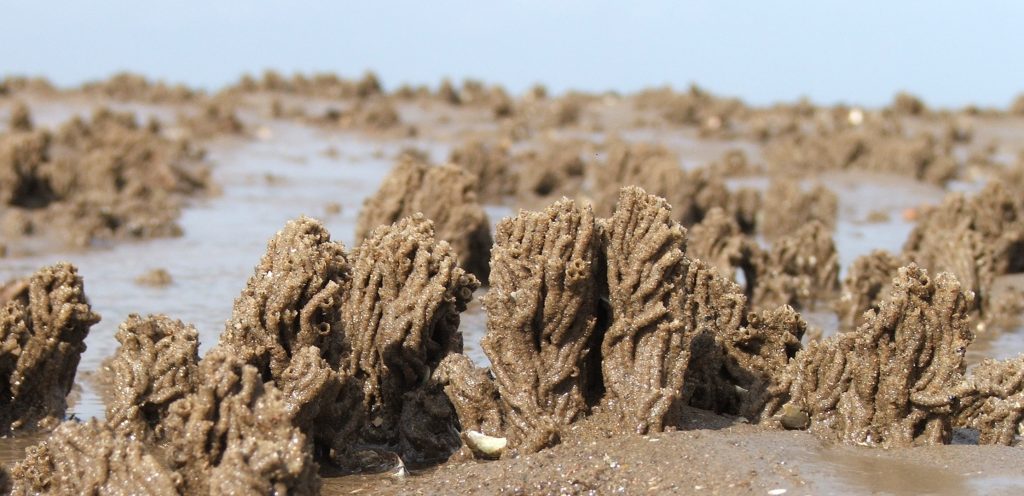
Sabellaria spinulosa, or the Ross worm to give it its common name, proliferates on this stretch of the coast like nowhere else in the UK, so much so that it forms a unique reef structure.
Reefs can be either biogenic (produced by living organisms) or geogenic (geological formed – historic) origin. They are rigid compact structures rising from ocean substrate/seafloor on solid and soft bottoms. Sabellaria spinulosa forms a biogenic reef structure, given it is a type of worm that creates columns and tubes to form structure.
What is Sabellera spinulosa?
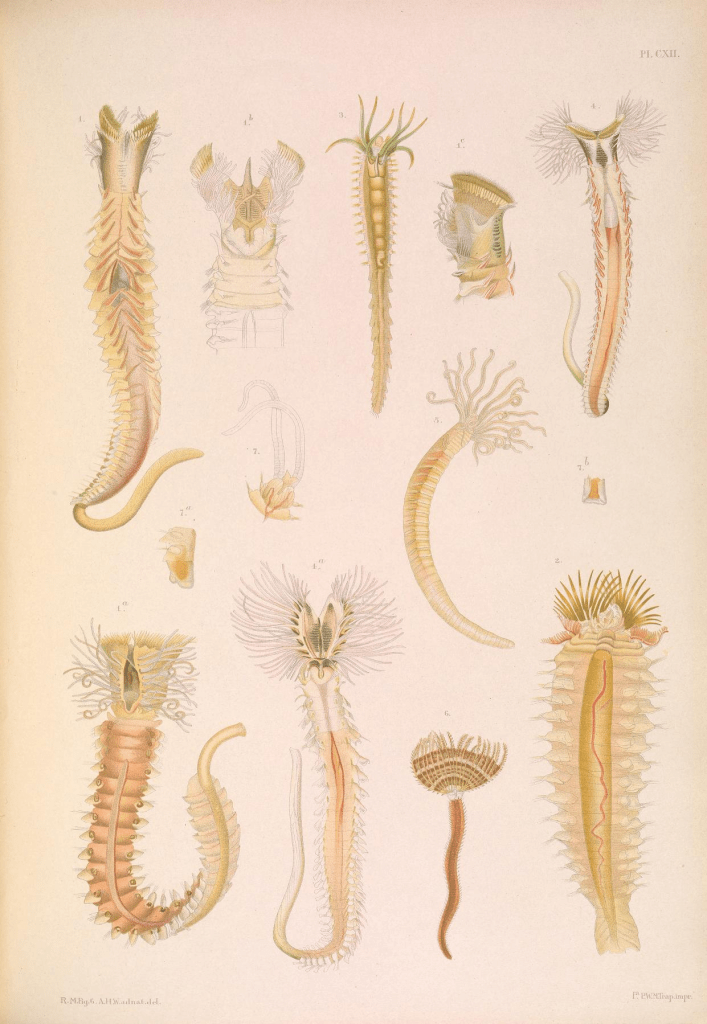
The ‘Ross worm’, Sabellaria spinulosa, is a sedentary, epifaunal polychaete. To translate that simply into non-scientific terms that means it is a worm that doesn’t move a great deal/burrows and lives attached to substrate or other surfaces such as the seafloor.
It usually inhabits the hard substrate of exposed, open coasts where sand is available for it to build its tubes. It is mainly subtidal (below the low tide mark but still a shallow area of the coast) but may be found in the low intertidal (between the low and high tide marks).
It is also a suspension feeder, which means it takes its food from the water column (food within the water rather than on the surface or seafloor).
This isn’t a rare worm, but the species is generally found individually which makes this site even more special, as favourable conditions of The Wash have allowed it to proliferate in high numbers.
This creature builds rigid tubes from its mucous and sand or shell fragments which, when found in high densities, enables it to build the reef like structure found in The Wash. This happens by these high numbers of tubes intertwining which acts as a barrier, collecting sand, detritus, and finer faecal material, creating the reef structure.
Ecological Importance
To date, fully developed and stable S. spinulosa reefs are only known to be found in the UK within The Wash and its surrounding waters.
That makes it an incredibly important reef system and habitat to protect given its uniqueness and rarity.
In UK waters elevations created by the worm’s tubes have been recorded of up to 30cm have been recorded across areas of more than 1km2 (JNCC). With this extent and height, the S.spinulosa reef provides a great deal of structure and shelter for many species.
In general, this stretch of coast is a sandy/sediment dominated environment, such that this reef provides diversity to the seabed, allowing the rise of different creatures that would otherwise not be found. By building these relatively hard and sheltered structures, S.spinulosa reefs provide a habitat that allows many other associated species to become established. Even where S.spinulosa has been found in low numbers the biodiversity in its proximity is vastly higher than that of the surrounding sand flat habitats.
It also aids in stabilising the cobble, pebble and gravel habitats in these areas further providing habitat for a greater variety of organisms that would not otherwise be found in these areas. These additional stabilised stony habitats give homes to epibenthos (bottom-dwelling) and crevice dwelling species.
The arguably more interesting mobile species found on this reef include large numbers of polychaetes (worms), mysid shrimps, pink shrimp, and crabs. The pink shrimp is of wider importance due to its commercial value, with S. spinulosa a vital food source for this species (Holt et al. 1998). They also support important surfaces for algae which is a core food source in the ocean food chain.
To put this diversity in numbers, these reefs can house more than twice as many species and almost three times as many individuals than nearby areas where S.spinulosa is absent (NRA, 1994).

Threats
As discussed above this reef is incredibly important due to its uniqueness, rarity and ability to provide habitat to species that would not flourish otherwise. This is not just on a Norfolk/Lincolnshire scale but also on a UK scale considering it is not found elsewhere within our shores.
As a result, it is critical we protect this ecosystem, with the current greatest threat to this reed considered to be physical disturbance. Although hard the tubes created by the worms are fragile in nature and as such vulnerable to human activities.
Dredging, trawling, net fishing and potting are all suspected to cause physical damage to these reefs due to the nature of these practices. For example, the force of the impact of the equipment associated with these actions can break and scar the structures, leaving them fragmented or destroyed entirely. Ropes and ties left in the water will have a similar effect when dragging in the current or being pulled up by their users.
Populations of S.spinulosa especially if loose and less intertwined with others, can be displaced by mobile fishing gear.
Other physical disturbances from events such as pipeline or wind farm construction, which is quite prevalent across our coast at the moment, can also seriously impact this reef as you might expect. Coastal works, such as dam and dike building, could also impact these reefs due to their proximity to the shore and the nature of these regimes changing tidal flows and hydrology where they are placed.
Pollution has also been highlighted in the literature as a potentially massive threat, with an example of the Wadden Sea suggesting how pollution, especially eutrophication (in conjunction with destructive physical practices), has completely changed the environment from S.spinulosa to Mytilus edulis beds (mussels) (JNCC).
Management
The Wash is a Designated Special Area of Conservation and the reef lies within this, giving it some level of protection under the Habitats Directive.
Management of marine activities and, in particular, certain fishing practices will be important in preventing further threats and decline of this habitat.
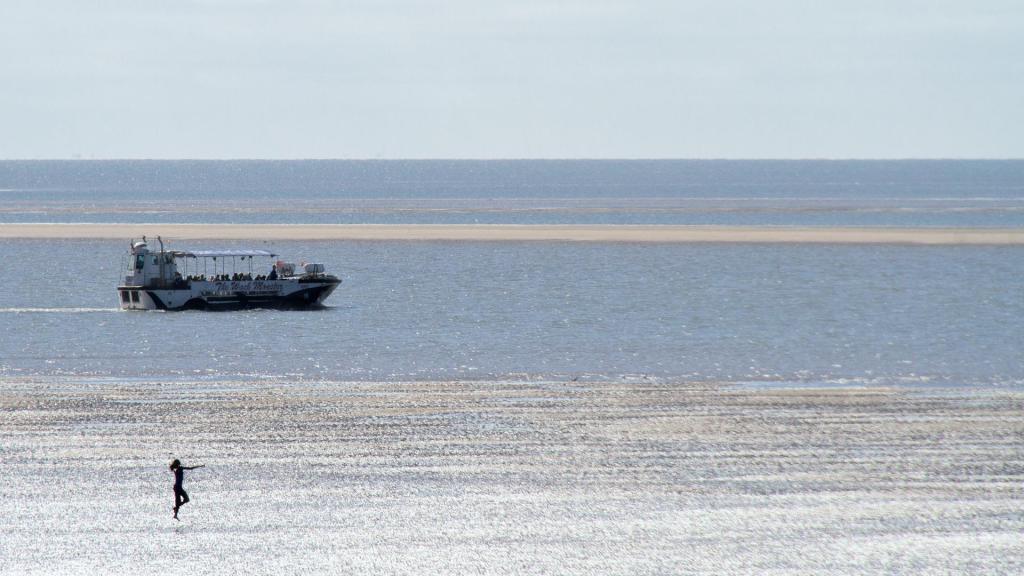
Management and monitoring of the reef at The Wash is difficult given the reef can only be accessed on foot at the lowest spring tide. By reaching the reef on foot you can more easily see where the relatively shallow reef structures are and survey them, in addition to the potential trawl marks, which would be very difficult to survey if submerged.
You also have to walk miles across mudflats and you need to take a boat which also makes it difficult.
Nevertheless, recent statutory advice and surveys have made legislation for this area to be closed off to trawling activity, which is excellent news for the future protection of this site!
Although this species is widely distributed in UK waters, locations where it is found at high densities, like in The Wash, are where a significant proportion of the total population occurs (more than 50%) yet this covers a small geographic area.
Therefore, the conservation and management of Sabellaria spinulosa reefs are and will continue to be, an important part of biodiversity conservation in UK waters.

 Jack's Conservation Blog

2 thoughts on “Another Reef in Norfolk? – The Magical Sabellaria spinulosa”