
Mudflats and sandflats are some of the most common marine habitats in our UK waters, but also some of the less appreciated.
This is likely because at first glance they look like brown, plain, barren landscapes, while mudflats are also generally not very accessible.
However, beneath the surface lies a whole array of marine life that is critically important for maintaining these marine ecosystems.
As abundant as the skies are with birds, or our seas are with fish, some parts of our muddy/sandy coastlines are just as abundant, if not more so, with burrowing sea creatures!
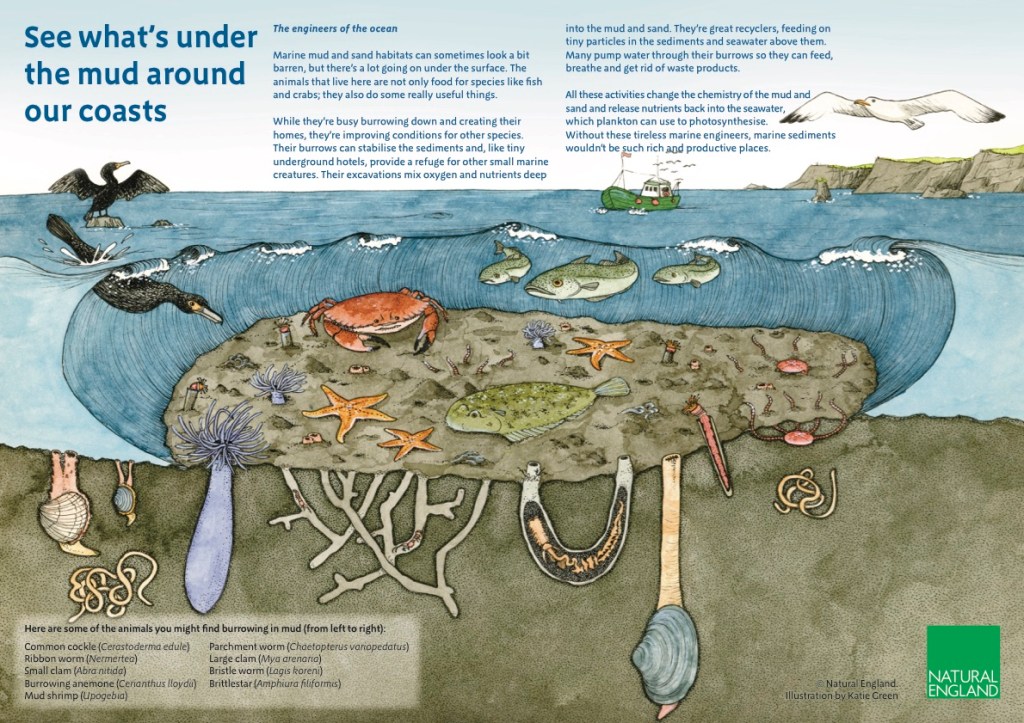
As you’ll find out below, mud and sand flats support a variety of worms, molluscs, and other burrowing critters.
Why Should We Care?
These are certainly interesting to look at and often alien-like, but why write a blog about them, why do we care, what’s the point in protecting them?
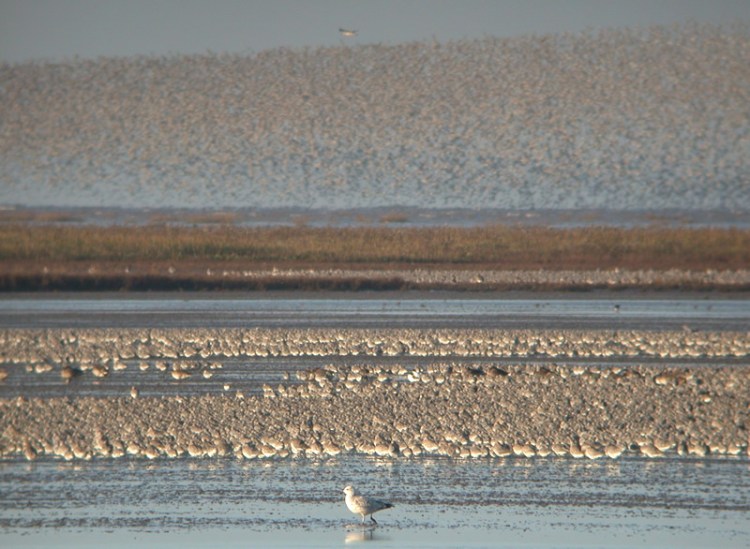
Alongside the accompanying algae in these habitats, these burrowing creatures provide rich foraging grounds for many bird species.
Protected bird species that live across our Norfolk coast that feed on all these creatures include the oystercatcher, dunlin, common scoter, sanderling, dark-bellied brent geese, gadwall, pintail, shelduck, knot, curlew, bar-tailed- and black-tailed godwits….that’s a lot of birds!
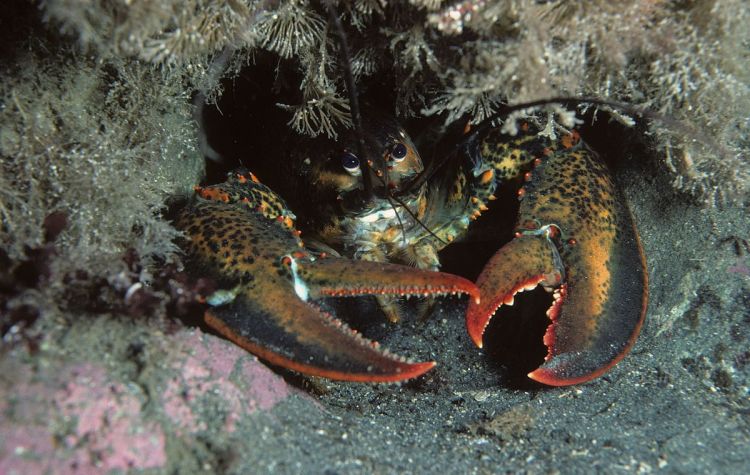
Not only do they provide food for the birds, but they also feed the fish and crustaceans (crabs and lobsters), who feed the local seals as well as us! As such, they are key species towards the bottom of the food chain in these areas.

The Worms
Now if you’ve read my other blogs you may already be aware of one of the important and unique worm species that live across our mud and sand flat habitats; Sabellaria spinulosa or the Ross Worm.
This is an incredibly important and unique species for our coastline, although in this blog we are going to look at some of the other important characters in this community.
There are so many more than just these two including parchment, bristle and ribbon worms but this blog would never end if we did them all!
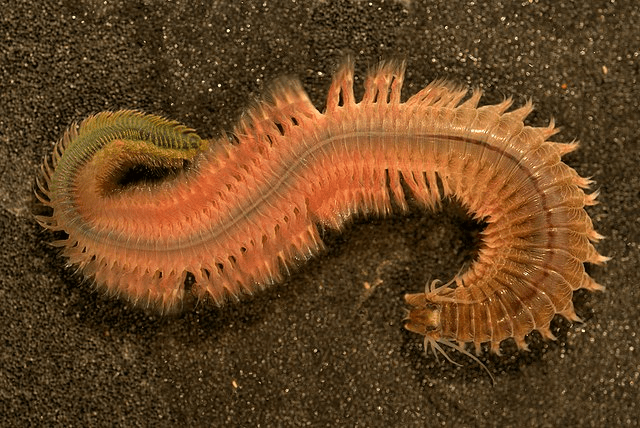
Ragworm
Ragworms are one of the worms known as polychaete worms, which just means that they have segmented bodies.
Ragworms can be found on a wide range of beaches made up of mud, sand or clay and burrow in U-shaped holes. This means that you can find ragworms (if you want to!) via the two holes present in the sand. Stepping down near these holes can result in a spurt of water rushing out, which is confirmation that a ragworm burrow has been located. In areas where ragworm is abundant a single footstep can result in a waterpark-like effect with several simultaneous spurts of water dancing at your feet.
Now admittedly these do look like something from Stranger Things and they are predators! Fear not though, as although some king ragworms can grow up to 3 feet they only eat very small sea creatures and aren’t going to cause you any harm!
These worms are particularly important for anglers who use them as bait. There are two main types: the larger king ragworm (Alitta virens) and the smaller common ragworm (Perinereis cultrifera), which is also known as the red ragworm.
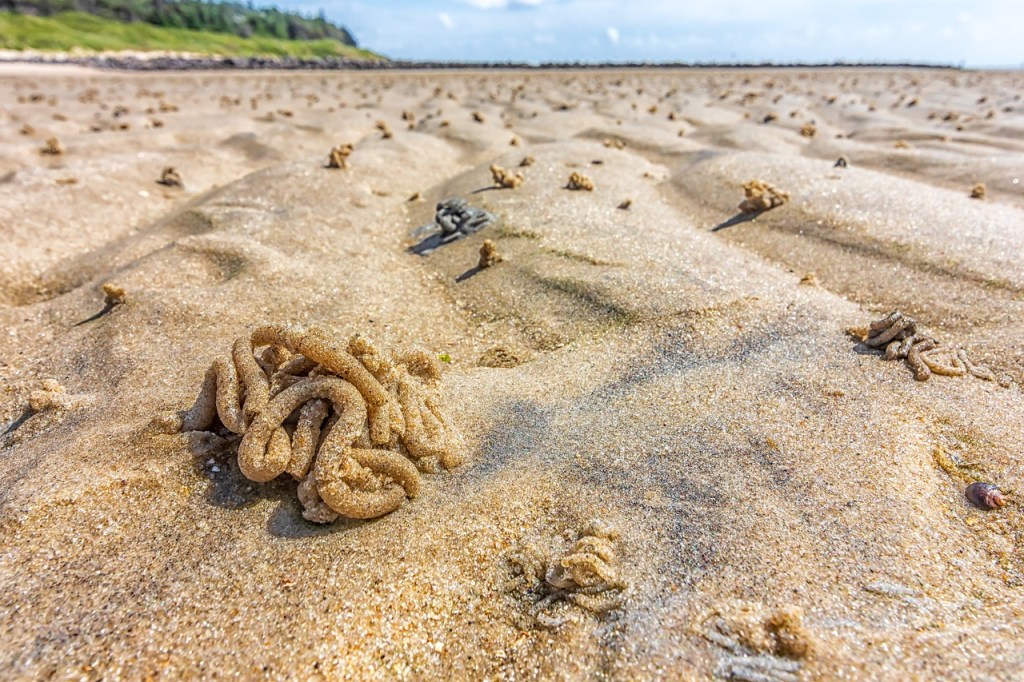
Lugworm
Now if you’ve ever been to a British coastline this is a familiar site and now you know what these weird piles of sandy sausages are!
Lugworms make these tell-tale casts next to their burrows, which makes it easy for fishermen to find this useful bait worm, especially for fish like Cod.
These look somewhat similar to the ragworms but tend to only reach around 20cm in length.
The Bivalves
Bivalves are molluscs that have shells consisting of two hinged parts, while a mollusc is a creature with a soft body, no spine and a shell for a home.
Bivalves are particularly important for filtering water of particles and organic matter in the water column above and are known to create cleaner, clearer waters in areas where they exist in large numbers. By creating clearer water they can also help other habitats like seagrass flourish, with its need for light to penetrate the water in order to grow.
Other species such as small/large clams, mussels, oysters and razor clams also reside in or on our sand and mud.
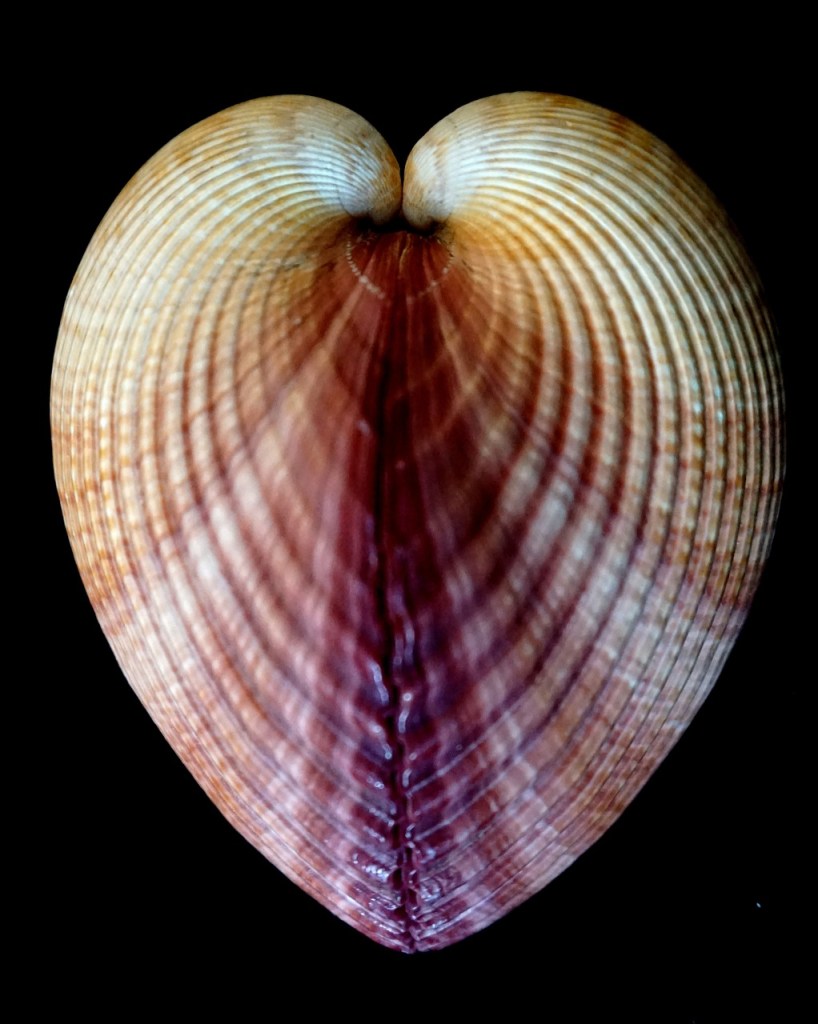
Cockles
Cockles are one of the better know bivalve species on our UK coast, mainly due to their popularity in the seafood industry.
The love heart-shaped cockles are usually up to 5cm in length and are one of the most important species to reside in the sand and mud of our Norfolk coastline.
Not only are they vital for a large number of fisherfolk livelihoods but they are also an incredibly important food source for rare and iconic birds on our coast such as the Oystercatcher.
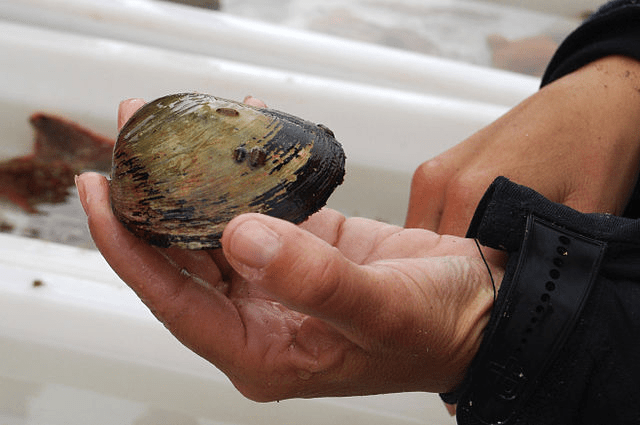
Ocean Quahog
One of the better names when it comes to molluscs in my opinion, the ocean quahog is one of the lesser-known bivalves to reside in our oceans.
Now one crazy fact about these guys is that it is the longest-lived animal known to man, with one individual found to be 507 years old… with all the things that quahog could’ve seen in that time in recent history you can forgive him for burying his head in the sand.
These bivalves can grow up to 13cm and are on the OSPAR (Oslo and Paris Conventions) list of threatened and/or declining species in the North Sea.
Other Burrowers
All these burrowing creatures deserve some limelight and awareness but we can’t fit them all in, brittlestars, brown shrimp and sand fleas are just a few of the others that missed the cut if you’re interested in looking them up!
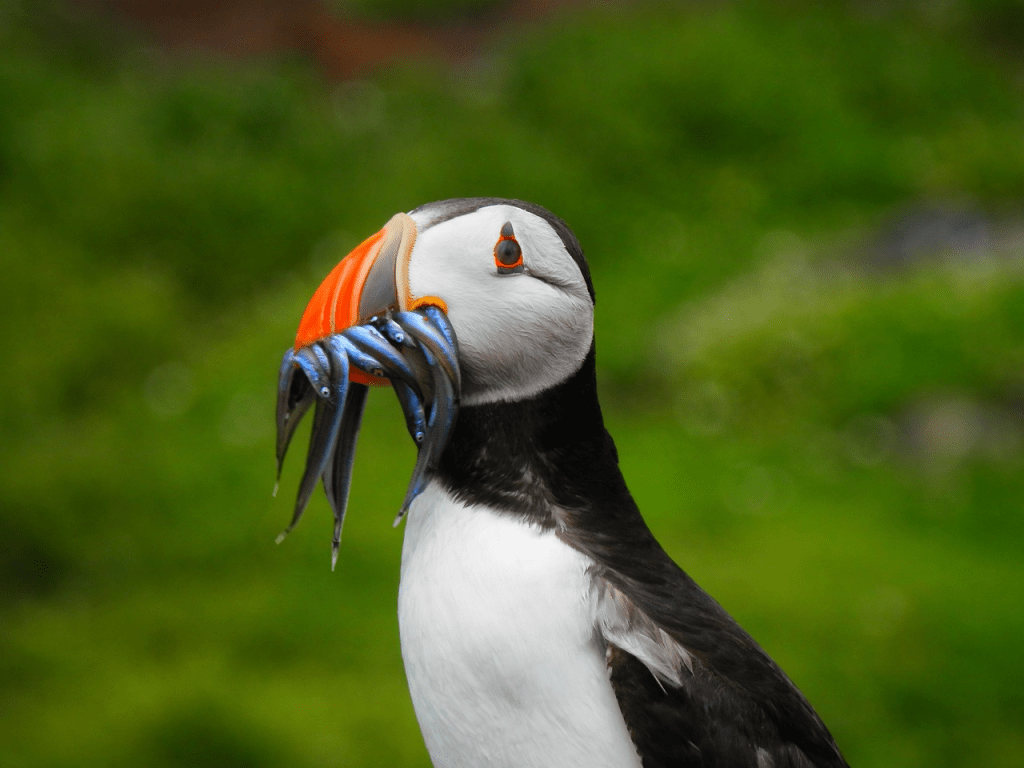
Sandeels
No, we don’t have puffins in Norfolk but these are an incredibly important food source for our bird species across the UK and I couldn’t resist the puffin photo opportunity!
In particular, our tern species, such as the little terns, love sandeels and it’s part of the reason these rare birds visit our shores each summer to rear their young.
Sandeels are small eel-like fish which grow up to 30 cm in length and can often be found in vast shoals, making for great diving experiences if you can find them.
Although not found on exposed mud, these fish do use the sand a great deal in order to bury themselves in an attempt to protect them from the many predators they have.
Burrowing Anemone
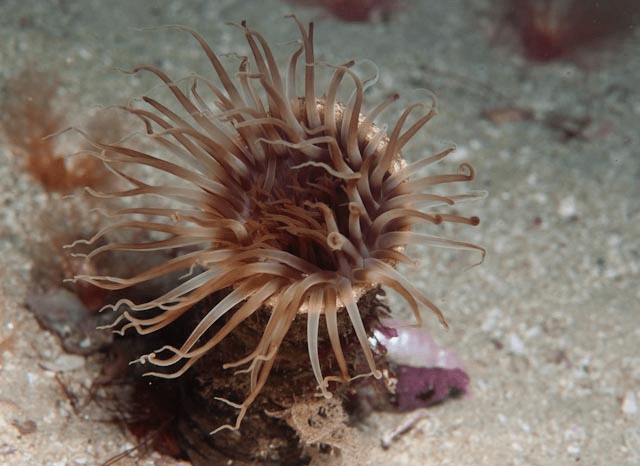
This common species is not a true anemone-like you would usually find attached to a hard surface. The burrowing anemone is a tube anemone that lives in a soft felt-like tube protruding above sand or mud.
Its tentacles are usually all that is visible and they can have over 100 of them on their exterior, which are used to sweep prey inwards.
When threatened the whole creature shoots back into its tube to safety. But, when out in the open the tentacle crown measures up to 10 cm across.
The Importance of Burrowing: Bioturbation
Now what you’ll have quickly realised in this blog is that all these creatures that live in the mud and sand, do so by burrowing. Although they are important as a food source the ability and nature to burrow is a hidden but important factor in why these species are so valuable to these environments.
Bioturbation is the process of moving sediment (in this case sand/mud) particles and water that changes the sediment’s properties.
By burrowing, the worms especially, can stabilise the sediments through the wall-like structures they create with mucous and the sediment below the surface. These burrows, created by all the creatures above, also act as sanctuaries for very small creatures, which in turn become a food source for the borrowers themselves.
Just the process of digging alone mixes oxygen and nitrogen through the mud and sand, helping life exist further below the sediment and thus creating a deeper layer of living sediment. Many of these species also pump water when burrowing, further mixing nutrients into the water and changing the chemistry.
By pumping water and waste they in turn provide food for microscopic plankton and algae, the base food source in the food chain, which shows how truly at the core the hidden borrowers are in these habitats.
Therefore, we can see that it’s not just mud and sand, there’s a whole hidden community lying below the surface.
Without this community, we wouldn’t have such rich and diverse mud and sand habitats around our coast and the birds, fish, crustaceans and seals would be in serious danger as a result of the key role these borrowers play in the food chain.
Disclaimer: All views put forward in my blogs are my own opinion and not in any way linked to Organisations or Companies I have, or currently work for.

 Jack's Conservation Blog


2 thoughts on “Is it Just Mud and Sand? What Really Lies Beneath the Surface?”